Showing posts with label odonates. Show all posts

29 August 2013

Non-Brewster summer adventures

This is by no means a comprehensive overview of some of the madness, but...

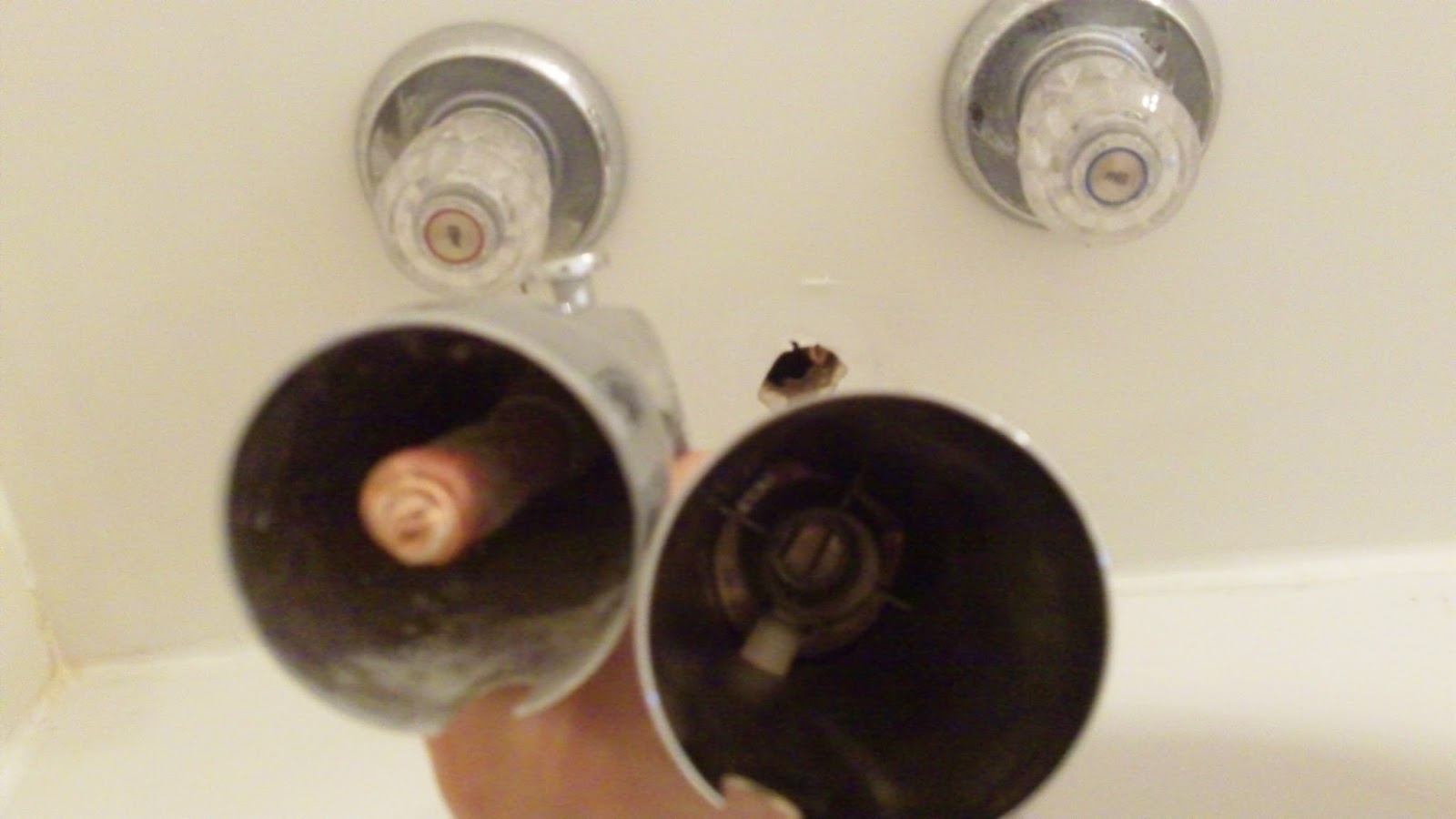
Hey, check it - when you go to replace a tub faucet and the whole PIPE twists... that's a bad thing.

And a photo of Nauga that *almost* renders here semi-photogenic:


My life mink, at the Lake Waco Wetlands:


End-of-life dragonfly experiencing the kiss-of-death (hug-of-death?) from a robber fly, also at the Lake Waco Wetlands (not sure of ID on the ode, leaning female Eastern Pondhawk though).


I was not able to get a photo of the looong-legged robber fly that was a bright yellowish orange that was clearly a wasp mimic; at least two were slowly flying around, taunting me. One robber fly that did cooperate (but not for me) in College Station was a house fly mimic. Sneaky!


Speaking of College Station: the two folks in the center, Dr. Sharman Hoppes and Dr. Ian Tizard, are most wonderful people. I'm sure the rest of them are as well, else they'd not be doing the ground breaking for the new avian building at Texas A&M! It was an excellent crowd, with folks from AFA, NPRPF, and the Wildlife Rehab & Education Center - giant family reunion for me!


Oh, and home: the grape vine is huge, but the avocado tree (hulking beast on the left) is but a mere shell of what it used to be. A glorious, gorgeous, strong, vibrant shell of what it used to be. It once topped the roof line, but Hurricane Ike did a number on it - what you see there is too big for me to wrap my hands around (2-3 years of growth?!) but was a new shoot after it was cut back to the roots.


Excellent progress in 20 short years of work, my delicious little avocado friend. 


Mom and Sib. Aww.


Mom and Self. Aww. Think she was talking, whoops.


Base of avocado (2 of 3 pictured).


25 May 2010

Photos from the field

Just a few fellow earthlings we ran into in the trans-Pecos:


Western Black-necked Garter Snake (Thamnophis cyrtopsis cyrtopsis), s. Brewster County, TX

This was a new herp for us. There were a pair of them in a water tank. -h may have a few better photos of these guys.

Also, hovering around the same pool of water in this portion of the Chihuahuan Desert were numerous ...


Flame Skimmer (Libellula saturata), s. Brewster County, TX

A day or two earlier we spent some time in the Davis Mountains, enjoying great birds and bugs. A few of the leps we came across:


Phaon Crescent (Phyciodes phaon) Jeff Davis Co.
We had a few Vesta Crescents (P. graphica) and later had Tiny Checkerspots (Dymasia dymas) in south Brewster County.

In the Davis Mountains the Satyrinids flying were

Canyonland Satyr (Cyllopsis pertepida), Jeff Davis County

This was a new lep for us and nearby was an equally new yet entirely uncooperative Drusius Cloudywing (Thorybes drusius). We were psyched about that species. -h did get a digi-bin of the drusius just for our records.

One bug we tried to turn into a Mexican Sootywing (Pholisora mejicanus) but just could not was

Common Sootywing (Pholisora catullus) Jeff Davis County

The underside hindwing just was not helping our cause to make this bug P. mejicanus.

While enjoying all, and photographing some, of the leps we had Hepatic (Piranga flava) and Western Tanagers (P. ludoviciana) making their presence known along with Gray Vireos (Vireo vicinior) and Gray Flycatchers (Empidonax wrightii). The latter was a seriously excellent bird as its summer range in TX just touches the sky-island habitats such as certain elevations in the Davis Mtns.

More from this trip later...

31 August 2009

SW thumbs, day 6

More thumbs! (or) Glorieta and Pecos

Saturday was the beginning of Indian Market, Santa Fe's biggest/busiest weekend of the year (apparently closely followed by Spanish Market). Being less than fond of crowds, Matt and I opted to leave town for most of the day. Our goal was simple, just to get out of town and maybe see some birds, bugs, and burgers. Mmm, burgers.


In Glorieta, Matt and I saw large flocks of Evening Grosbeaks (a new bird for both of us) and, as posted in the Sister & Skipperlings post, the lovely Arizona Sister (and later, Russet Skipperling). The photos below give you an idea of what you're looking for when you stare at a tree long enough ;-)


Other fun finds included Brewer's Blackbird and a bluet (ID pending).


By the time we finished traipsing around Glorieta, it was most definitely time for sustenance. Matt remembered a place from his youth, Bobcat Bite. Apparently it had been a bit over a decade since he'd last sunk his teeth into their green chili cheeseburger.


While chowing on the deliciously happy burgers (their beef is about as natural as it gets, shy of still being in the pasture), we were fortunate to be seated in front of the window. The bar seats are perfect for birding - their bird bath attracted Juniper Titmouse and House Finch, but the hummingbird feeder was constantly a blur of Broad-tailed and Black-chinned Hummingbirds. Much to our surprise, there was even one adult male Ruby-throated Hummingbird in the mix. What immediately set him apart was the short little stubby tail that was quite hidden by his wings. His gorget (throat) was a little more angular than the others, if similar in color (they all reflected the red feeder rather obviously).


After thoroughly satiating our green chili cheeseburger curiosity, we adventured off to Pecos and the fabled Monastery Lake. Fabled, because the signs kept pointing and we never thought we'd get there. Specifically, I was getting drowsy from the burger and really wanted to loiter in the shade. Eventually we found it, surrounded by signs:


Since the lake proper was surrounded by people fishing, Matt and I wandered some trails. As usual, the water was ridiculously cold and I was unable to keep my feet out of it. Water beckons me.


Otherwise, it was this stop where Matt found our Russet Skipperling, and I pestered a lovely dragonfly (ID pending). On our way back to civilization, we stopped at a crossing of the Pecos River... and you can guess whose feet got wet. Again. Must be a peculiar genetic attraction to my toes being in water. Along the road to the river, however, we stumbled upon a rather fun looking (and rather deceased) insect that quite stumps me. Suggestions are welcome!

Edit: it seems to be one of the megaloptera or plecoptera, but is missing antennae.


Upon returning home, we found that the cousinlet was being awakened from her nap. And, missing our puppy, Matt was found at the top of the stairs, snuggling with their puppy. Not a bad way to unwind after a day of wet feet and green chili adventures.


Day 7 will likely be a lot of insects, beware!

07 July 2009

the ode

My dear mother has adapted well to a biologically inclined daughter. She no longer calls anything a "seagull" because if she can't call it a Laughing Gull (Larus atricilla), she has to call it a "Larid species." For butterflies, unidentified, they are "Lepidopterids" and our beloved dragons and damsels are "Odonates." So to honor the Odes of Texas, I'd like to introduce some of the carnivorous little friends we saw at Lake Waco Wetlands in June.


Halloween Pennant (Celithemis eponina)


Common Whitetail (Plathemis lydia), male. These were both actually taken through my binoculars, so apologies for the quality!

As my own understanding of Odonates is so horribly limited, I will have to just apologize for the next two shots. They're rather diminutive, even for damsels, with tootpick-sized bodies and less than gaudy features. The subtle colors could have something to do with sexual dimorphism or just great camo.


At least the bird and bug worlds are similar in applying easy labels to relatively abundant and easily distinguishable species - there are some remarkably charismatic odes out there.

02 July 2009

playing with wildlife

I'd like to clarify that I don't often "play" with wildlife. Generally it's a miracle that I get my hands on them to begin with, or it's a risk of crossing the road (in the case of snakes and turtles). June offered a rather complacent Plains Clubtail (Gomphus externus) in Brown Co. and Ornate Box Turtle (Terrapene ornata) in Palo Pinto Co. Both were a bit disgruntled when handled, but each was returned from whence it came quite intact (and well documented).


Startled and kicky would be a good description for this beastling.


The Onate Box Turtle was displeased from the start:


Check out the defense system this little fellow has - CLAWS and the FANGS... well, not so much on the fangs, but there's certainly some digging power in the claws. And a rigid carapace is definitely handy on occasion, for retreating anyway.


Since Matt was suitably intimidated by the glaring of such a ferocious creature, s/he was released to wander the other side of the road. Roads are not only a horrible cause of habitat fragmentation, but roads cause the fragmentation of turtles that people don't (or can't) slow down for.